Training for Longevity: How Athletes Can Build a Body That Lasts
 By Marina, Astrea co-founder Substack
Martin, Astrea’s co-founder, turned 40 this year and wrote about how his recovery windows had quietly doubled. I’m 35, and reading his piece, I found myself asking a different question. Not “what do I do now that something’s changed,” but “what should I be doing right now, before it does?” It turns out that’s the more useful question, and it has a real answer.
Quick digest
- Cardiorespiratory fitness is one of the strongest predictors of lifespan we have, with no ceiling to the benefit: in a study of over 120,000 adults, the least-fit group had roughly five times the risk of dying during the study period compared with the most-fit group (Mandsager et al., 2018).
- How fit you are in your 20s and 30s predicts outcomes well beyond that decade. In one long-running study, every extra minute someone could last on a treadmill test in young adulthood was tied to a 15% lower risk of death almost 27 years later (Shah et al., 2016).
- Muscle mass starts its slow decline around age 30, well before most people notice it (Larsson et al., 2019), and peak bone density is mostly locked in by your late 20s to early 30s and can’t be rebuilt the same way later (Weaver et al., 2016).
- The physiological reasons to start differ by sex, but the timing advice doesn’t: building strength and bone density before 35-40 gives both sexes more reserve for the hormonal changes ahead.
- None of this means it’s too late at 40 or 50. It means the earlier you start, the bigger the cushion you’re building.
Why “training for longevity” is a different question than “training for performance”
Most training advice answers a short-term question: how do I get faster, stronger, or fitter for the next race or block. Longevity training answers a longer one: what am I doing right now that determines how my body functions in 20 or 30 years.
The two overlap more than they compete. Cardiorespiratory fitness, the kind you build through the same endurance training that improves race times, has one of the clearest dose-response relationships with lifespan of any modifiable factor doctors can measure. In a cohort of more than 120,000 adults who underwent treadmill testing, cardiorespiratory fitness was inversely associated with death from any cause, with no observed upper limit: the fittest people kept seeing lower risk than the next-fittest group, all the way to the top of the fitness distribution (Mandsager et al., 2018). Put concretely, the least-fit group in that study had roughly five times the risk of dying during the study period compared with the most-fit group, a bigger gap than researchers see for well-known risk factors like smoking or diabetes.
Grip strength tells a similar story from a different angle. In a study that measured hand-grip strength in nearly 140,000 adults across 17 countries, weaker grip was linked to higher risk of death, cardiovascular disease, and stroke, and it predicted risk at least as well as blood pressure did (Leong et al., 2015). Grip strength itself isn’t the point; it’s a simple, measurable stand-in for overall muscular strength and the physical reserve that comes with it. The takeaway connecting both findings: what your body can actually do is a more honest signal of how well it’s aging than how it happens to feel on any given day.
Why the real inflection point is your 30s, not your 40s
Martin’s piece on training after 40 is about adjusting once your recovery has already changed. This is about the years before that: what’s already shifting quietly in your 30s, long before it shows up on a wearable.
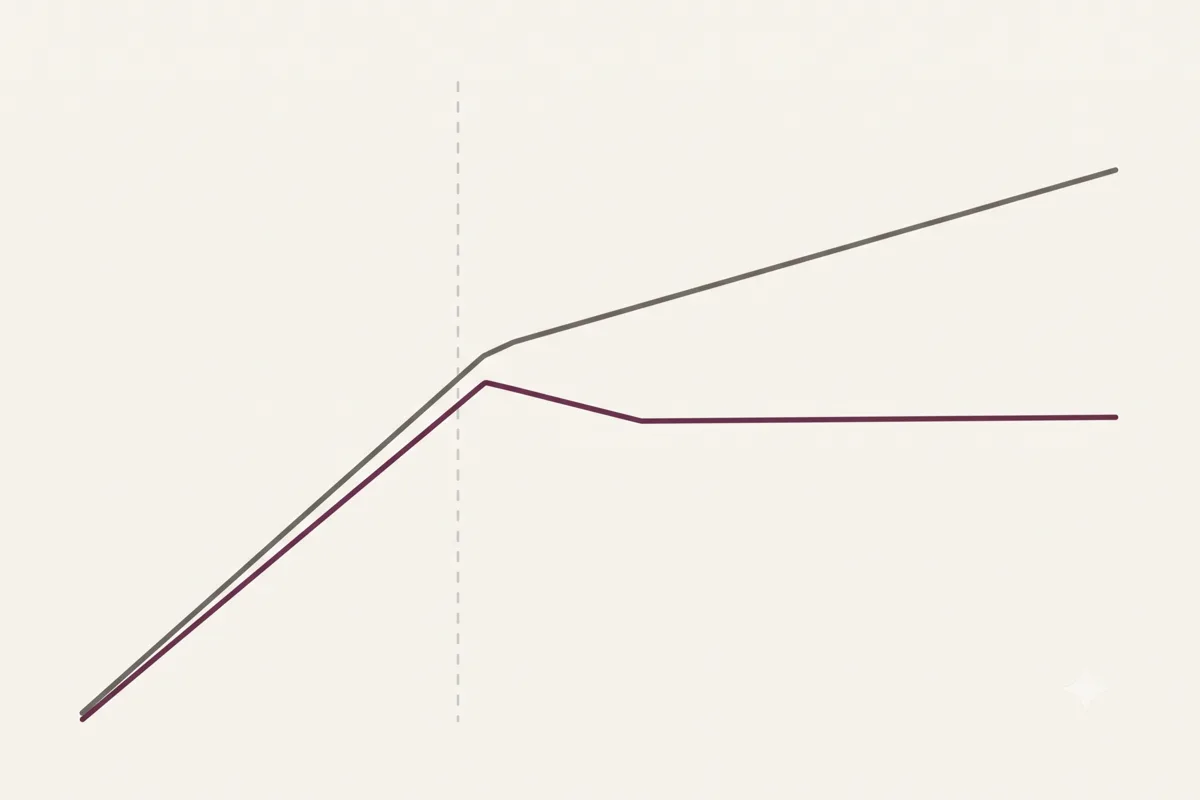
Muscle mass begins declining gradually starting around age 30, a process that continues even in people who stay active, though training slows it considerably (Larsson et al., 2019). Bone follows an even less forgiving timeline. Peak bone mass, the highest density your skeleton will ever reach, is achieved by the end of your 20s to early 30s, and it can’t be rebuilt to that level later in life the way muscle can be regained (Weaver et al., 2016). Whatever density you’re carrying into your late 30s is close to the ceiling you’ll draw down from for the rest of your life. That single fact reframes strength training in your 30s: it isn’t optional prep for “later,” but rather the deposit that determines your balance decades from now.
The clearest evidence that early fitness compounds comes from a study that measured treadmill fitness in adults aged 18 to 30 and followed them for a median of almost 27 years. Every additional minute someone could sustain on that early treadmill test was associated with a 15% lower risk of death and a 12% lower risk of cardiovascular disease by the time participants reached their 50s, independent of how their fitness changed in the years in between (Shah et al., 2016). Fitness measured in your 20s and 30s is already shaping outcomes you won’t see for another 30 years, well past whatever it tells you about how you feel that decade.
Picture it as two separate accounts. The muscle account can be topped up at almost any age; strength training in your 50s and 60s still reliably builds new muscle. The bone account works differently: you’re mostly filling it in your 20s and making smaller deposits into your early 30s, and after that, the balance you’re carrying is close to what you’ll draw down from for decades. Training now isn’t about outrunning either decline. It’s about which account you’re still able to grow, and making sure you’ve grown it as much as you can before the window narrows.
None of this means 40 or 50 is too late to start, and Martin’s piece on training after 40 covers exactly what to do if that’s where you are. It means the 30s aren’t a neutral holding pattern before “real” training decisions start mattering. They’re already the decision.
What changes for women, and what changes for men
The physiological pressure to start earlier isn’t the same for both sexes, but it points toward the same conclusion for each.
For women: the bone density argument is the sharpest version of “start before 40.” Because peak bone mass is set by your late 20s to early 30s and estrogen decline during perimenopause accelerates bone loss once it begins (Weaver et al., 2016), the density you build or fail to build in your 30s is close to the actual ceiling you carry into that transition. The hormonal shift reaches beyond bone, too: falling estrogen during perimenopause also reduces parasympathetic nervous system activity (the “rest and recover” branch of the nervous system, as opposed to the “fight or flight” branch), which tends to lower resting heart rate variability and raise resting heart rate (Fang & Zhang, 2024), the same autonomic shift Martin’s piece covers from the recovery side. The reassuring half of this is that resistance training still works well after the transition starts. A meta-analysis of resistance training programs in postmenopausal women found meaningful improvements in bone mineral density at the spine, hip, and femoral neck (the narrow part of the thighbone just below the hip joint, a common fracture site), with the strongest effects from higher-intensity training done a few times a week over a longer stretch of months (Zhao et al., 2025). Starting earlier banks more reserve, but starting later still moves the number in the right direction.
For men: testosterone declines by roughly 1-3% a year starting around age 35-40 (Hackney, 2020), a range Martin is right in the middle of. Because testosterone supports muscle protein synthesis, this is part of why maintaining muscle mass gets measurably harder past that point. The practical implication is the mirror image of the bone argument for women: the more muscle mass and strength a man has built by the time that decline starts, the more room there is before it becomes functionally noticeable. Training in your mid-30s builds the base that decline gets applied against later.
In both cases, the mechanism is different, hormonal and skeletal versus hormonal and muscular, but the timing lesson is identical: the physiological changes of your 40s land on whatever base you brought into them. Neither pattern is a malfunction or a sign that a body is aging “badly.” They’re both predictable, well-documented physiology, and both respond to the same lever: strength training, started earlier rather than later.
What actually builds a body that lasts
Strength training, treated as core, not supplemental. This is the single highest-leverage habit for both the bone and muscle arguments above, and it matters more than any other line item on this list.
Some form of sustained cardiovascular training. Given how strongly cardiorespiratory fitness tracks with long-term mortality risk (Mandsager et al., 2018), and how much early fitness appears to compound over decades (Shah et al., 2016), consistent aerobic work, at whatever intensity you’ll actually sustain, is doing more long-term work than it gets credit for day to day.
Load-bearing, impact-tolerant movement, especially if you’re a woman under 40. Given the timeline on peak bone mass, don’t wait for a bone density scan to make this feel urgent, since the scan will only tell you what you’ve already banked or missed by then.
Consistency over intensity. Trained masters athletes who keep training lose aerobic fitness at roughly half the rate of people who stop entirely, about 1% a year instead of a much steeper decline (Burtscher et al., 2022). The habit of staying in motion, decade after decade, outperforms any single hard training block.
None of these four are exotic or require a special longevity protocol. They’re the same fundamentals that show up in general strength and endurance advice everywhere. What changes with a longevity lens isn’t the list, it’s the reasoning: you’re not doing them for how you’ll feel next month, you’re doing them because your 30s are quietly setting the terms for your 50s.
What to actually do
- Add or protect two full-body resistance sessions a week if you don’t already have them; treat them as non-negotiable, not optional.
- If you’re a woman under 40, include some impact or load-bearing training now, not as a reaction to a bone scan later.
- Keep a base of steady cardiovascular training even in seasons when you’re not chasing a specific race or goal.
- Track a simple functional marker over time, like grip strength or how you handle your working sets, alongside whatever recovery metrics you already watch.
- If you’re past 40 already, this isn’t a verdict. Pair this with Martin’s piece on training smart after 40 for what to adjust now.
- Think in decades, not training blocks. The goal isn’t this month’s numbers; it’s the base those numbers are building for your 50s and 60s.
FAQ
Is 35 too early to think about “longevity training”? Isn’t that for older people? No, it’s close to the ideal window. Peak bone mass is set by your late 20s to early 30s (Weaver et al., 2016), and fitness measured in your 20s and 30s is linked to health outcomes measured decades later (Shah et al., 2016). Waiting until 40 or 50 to start doesn’t make the training pointless, but it does mean building from a lower base.
If I’m already over 40, is it too late for any of this to matter? No. Resistance training still meaningfully improves bone density in postmenopausal women (Zhao et al., 2025), and trained masters athletes retain fitness at roughly twice the rate of people who stop training altogether (Burtscher et al., 2022). Starting later means building less of a cushion, not building none.
Do men and women actually need different training for longevity, or is this the same advice with a different label? The emphasis differs even though the core habits (strength training, cardiovascular fitness, consistency) are the same for both. Women have a harder deadline on bone density specifically, since it peaks in the late 20s to early 30s and estrogen decline later accelerates its loss. Men face a more gradual, muscle-focused pressure from declining testosterone starting in their mid-to-late 30s.
What’s the one thing I should actually prioritize if I can’t do everything on this list? Strength training. It’s the habit that addresses both the bone density and muscle mass arguments at once, and it’s the one most people are already under-doing relative to cardio.
How is this different from the Masters Athletes article on training after 40? That piece is about adjusting your training once recovery has already changed, mainly through recovery windows, hormonal shifts already underway, and load management. This one is about the years before that: what’s quietly happening in your 30s and what to build now so the changes covered there land on a stronger base.
Does tracking my recovery data help with any of this, or is longevity training just about the gym? Training decisions like these are the foundation; recovery tracking is what tells you whether you’re absorbing the training rather than just accumulating it. They’re complementary, not competing priorities.
Sources
Burtscher, J., Strasser, B., Burtscher, M., & Millet, G. P. (2022). The impact of training on the loss of cardiorespiratory fitness in aging masters endurance athletes. International Journal of Environmental Research and Public Health, 19(17), Article 11050. https://doi.org/10.3390/ijerph191711050
Fang, M., & Zhang, P. (2024). Regulation of exercise on heart rate variability in perimenopausal and postmenopausal women. Journal of Central South University. Medical Sciences, 49(4), 516-525. https://pubmed.ncbi.nlm.nih.gov/39019780/
Hackney, A. C. (2020). Hypogonadism in exercising males: Dysfunction or adaptive-regulatory adjustment? Frontiers in Endocrinology, 11, Article 11. https://doi.org/10.3389/fendo.2020.00011
Larsson, L., Degens, H., Li, M., Salviati, L., Lee, Y. I., Thompson, W., Kirkland, J. L., & Sandri, M. (2019). Sarcopenia: Aging-related loss of muscle mass and function. Physiological Reviews, 99(1), 427-511. https://doi.org/10.1152/physrev.00061.2017
Leong, D. P., Teo, K. K., Rangarajan, S., Lopez-Jaramillo, P., Avezum, A., Orlandini, A., Seron, P., Ahmed, S. H., Rosengren, A., Kelishadi, R., Rahman, O., Swaminathan, S., Iqbal, R., Gupta, R., Lear, S. A., Oguz, A., Yusoff, K., Zatonska, K., Chifamba, J., … Yusuf, S. (2015). Prognostic value of grip strength: Findings from the Prospective Urban Rural Epidemiology (PURE) study. The Lancet, 386(9990), 266-273. https://doi.org/10.1016/S0140-6736(14)62000-6
Mandsager, K., Harb, S., Cremer, P., Phelan, D., Nissen, S. E., & Jaber, W. (2018). Association of cardiorespiratory fitness with long-term mortality among adults undergoing exercise treadmill testing. JAMA Network Open, 1(6), Article e183605. https://doi.org/10.1001/jamanetworkopen.2018.3605
Shah, R. V., Murthy, V. L., Colangelo, L. A., Reis, J., Venkatesh, B. A., Sharma, R., Abbasi, S. A., Goff, D. C., Carr, J. J., Rana, J. S., Terry, J. G., Bouchard, C., Sarzynski, M. A., Eisman, A., Neilan, T., Das, S., Jerosch-Herold, M., Lewis, C. E., Carnethon, M., … Lima, J. A. C. (2016). Association of fitness in young adulthood with survival and cardiovascular risk: The Coronary Artery Risk Development in Young Adults (CARDIA) study. JAMA Internal Medicine, 176(1), 87-95. https://doi.org/10.1001/jamainternmed.2015.6309
Weaver, C. M., Gordon, C. M., Janz, K. F., Kalkwarf, H. J., Lappe, J. M., Lewis, R., O’Karma, M., Wallace, T. C., & Zemel, B. S. (2016). The National Osteoporosis Foundation’s position statement on peak bone mass development and lifestyle factors: A systematic review and implementation recommendations. Osteoporosis International, 27(4), 1281-1386. https://doi.org/10.1007/s00198-015-3440-3
Zhao, F., Su, W., Sun, Y., Wang, J., Lu, B., & Yun, H. (2025). Optimal resistance training parameters for improving bone mineral density in postmenopausal women: A systematic review and meta-analysis. Journal of Orthopaedic Surgery and Research, 20(1), Article 523. https://doi.org/10.1186/s13018-025-05890-1
A note from us We’re Martin and Marina, Astrea’s co-founders. We’re both into data and serious about our own training, but neither of us is a doctor or a clinical researcher. The health and physiology claims in this article come from published, peer-reviewed research, not our own expertise, which is why every article ends with a Sources list above. If a claim doesn’t trace back to a real source, we cut it before it gets published.
Astrea is built for the long game — recovery and readiness tracking that adapts as your training, and your body, changes over the years.