Masters Athletes: How to Train Hard and Recover Smart After 40
 By Martin, Astrea co-founder
I turned 40 this year, and the question I found myself asking wasn’t about VO2 max charts or macros. It was simpler: how should I actually be training now? I’d been a runner for years, and the same week of workouts that used to leave me fresh by Wednesday was leaving me flat by Friday, which is part of why I picked up CrossFit this year instead of just logging more miles. It’s a question most masters athletes ask themselves eventually, and it has a real answer, grounded in how recovery, hormones, and sleep change after 40. Athletes who train with that answer in mind keep performing at a high level for decades. Here’s what the research says, and how I’m using it.
Quick digest
- Trained runners over 40 lose aerobic fitness at roughly 1% a year, about half the rate of sedentary adults the same age (Burtscher et al., 2022).
- Recovery windows lengthen with age: expect 48-72 hours after hard sessions instead of 24-36.
- Estrogen decline in perimenopause and testosterone decline in men both reduce parasympathetic (rest-and-recover) nervous system activity; the mechanism differs, but the effect on recovery is similar.
- Strength training becomes non-negotiable after 40, for both sexes, to counter age-related muscle loss.
- Ramp up training gradually rather than in big jumps: if your typical week is, say, 30 miles (48 km), jumping straight to 45 miles (72 km) is linked to meaningfully higher injury risk (Griffin et al., 2020). Stepping up to around 33-36 miles (53-58 km) instead, a 10-20% increase, is the safer range.
Why recovery takes longer after 40
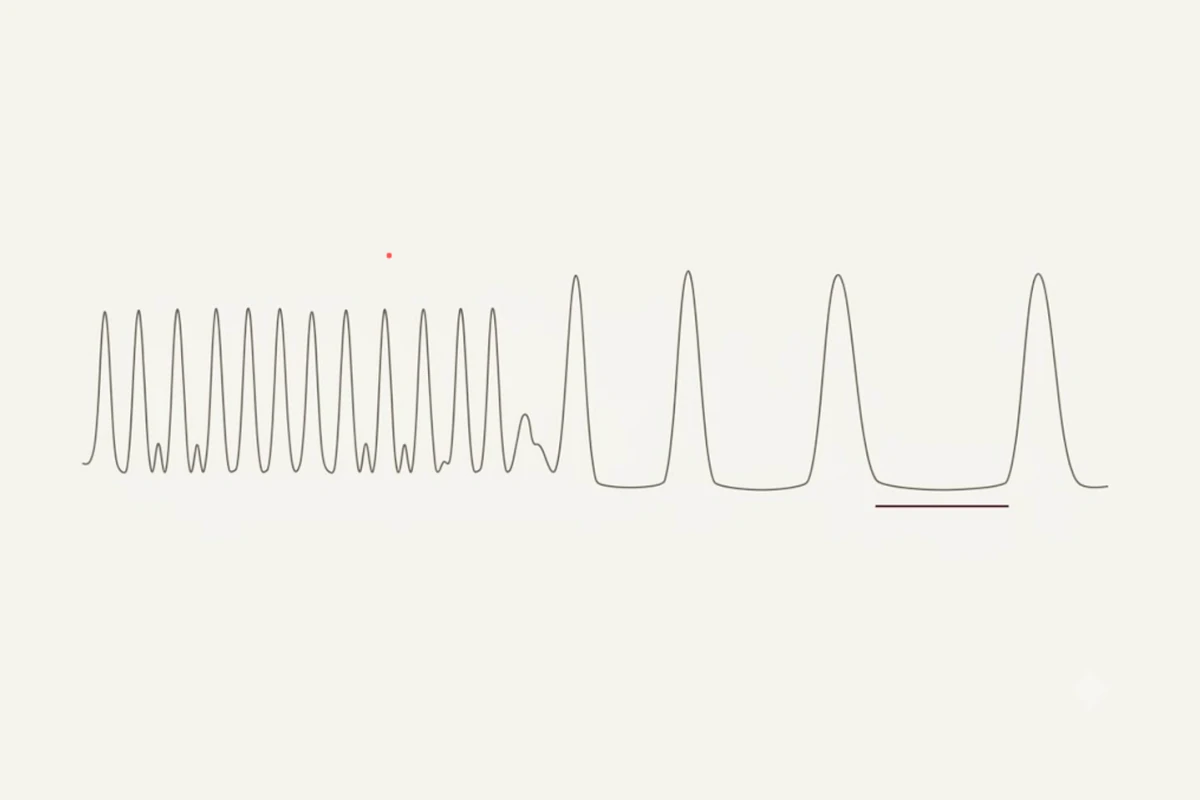
For a while I read my slower recovery as losing motivation, or just losing fitness. Neither one was true. Muscle repair, autonomic nervous system rebalancing, and connective tissue adaptation all slow down with age, which is why masters athletes commonly need 48 to 72 hours to recover from a hard session, compared with 24 to 36 hours for younger athletes. Athletes who keep training consistently still lose aerobic capacity (VO2 max) at only about half the rate of people who stop training altogether: roughly 1% a year, versus the steeper decline seen in sedentary adults (Burtscher et al., 2022). Staying active remains the best tool against age-related decline; the strategy just has to change. For me that meant cutting the “medium-hard” sessions that are too easy to build fitness and too hard to fully recover from, and drawing a clearer line between easy days and hard days.
The hormonal shift: what changes for women, and what changes for men
Training after 40 means training through a real hormonal transition, for men and women both, just via different pathways. Neither is a malfunction; both are predictable physiology worth understanding.
For women: during perimenopause, fluctuating and then declining estrogen reduces parasympathetic nervous system activity, which tends to lower resting heart rate variability (HRV) and raise resting heart rate (Fang & Zhang, 2024). Hot flashes and night sweats can also fragment sleep with brief overnight heart-rate spikes, which some recovery apps misread as overtraining rather than a hormonal event. Resistance training remains highly effective through this transition: in a randomized trial of menopausal women, even a minimal-dose resistance program produced meaningful strength gains without disrupting cardiac autonomic regulation (Dias et al., 2024). You don’t need a dramatically different program, just one that doesn’t ignore what’s going on hormonally.
For men: testosterone declines by roughly 1-3% per year starting around age 35-40 (Hackney, 2020), which is exactly the range I’m in now. Because testosterone drives muscle protein synthesis and limits protein breakdown, this decline is the main reason men over 40 have to work harder to maintain the muscle mass they used to hold onto easily. The evidence that exercise raises resting testosterone in older men is mixed: a systematic review and meta-analysis found short-term training programs had unreliable effects on basal testosterone levels (Hayes & Elliott, 2019). The practical takeaway I’ve settled on: train to build and hold onto muscle despite the decline. Resistance training does that reliably, whatever it does to the hormone number itself.
In both cases, the nervous system and hormonal environment are shifting in ways that change your recovery numbers. That’s information to plan around, not a sign that something has gone wrong.
Training smart: three things that actually move the needle
Strength training. Muscle mass declines with age even in highly trained athletes, and resistance training is the most reliable countermeasure available to both sexes. Pair it with adequate protein: across randomized trials in older adults, combining protein supplementation with resistance training produced significantly greater gains in muscle strength and mass than resistance training alone (Ma et al., 2025). This is the piece I’d neglected most as a lifelong runner, and it’s the real reason CrossFit replaced some of my mileage this year rather than the other way around.
Gradual load increases. Compare your recent training volume (say, the last week or two) to what you’ve averaged over the past month or so. Jumping well above that recent average, like running 45 miles (72 km) in a week when you’ve been averaging 30 miles (48 km), is linked to meaningfully higher injury risk (Griffin et al., 2020). A safer step up from that same 30-mile (48 km) average would be roughly 33-36 miles (53-58 km), a 10-20% increase, rather than a big jump. This matters more after 40, when tissue adaptation is slower and a sudden jump in load has less runway to be absorbed safely.
Recovery days. Because full recovery now takes longer, easy days aren’t optional filler; they’re where the adaptation from hard days actually gets banked. Build recovery breaks into every training block rather than waiting for a setback to force one on you.
What I’ve actually changed
- Structure most weeks around clearly easy and clearly hard sessions; cut the muddy middle.
- Add two full-body resistance sessions a week if you don’t already, prioritizing the major muscle groups.
- Aim for roughly 1.2g of protein per kilogram of bodyweight daily if you’re training regularly.
- Compare your weekly training volume to your monthly average, and keep increases to roughly 10-20% at a time rather than big jumps.
- If you’re a woman in perimenopause, expect resting HRV and heart rate to shift, and don’t read a rough night, alone, as a training failure.
- If you’re a man past 40, focus on training that preserves muscle rather than chasing a hormone number.
- Treat sleep and full rest days as scheduled training, not as what’s left over.
FAQ
Is it normal that I need more rest days than I used to? Yes. Recovery windows lengthen with age due to slower tissue repair and autonomic recovery: needing 48-72 hours after a hard session instead of 24-36 is a documented pattern in masters athletes, not a sign you’re out of shape.
Can I still get stronger and fitter in my 40s and 50s? Yes. Aerobic fitness declines much more slowly in people who keep training than in those who stop, and resistance training reliably builds strength at any age when paired with adequate recovery and protein intake.
Does menopause mean my recovery data will always look “bad”? No. Your baseline is shifting for real physiological reasons (falling estrogen affecting autonomic balance), and vasomotor symptoms like night sweats can look like overtraining on a wearable. That’s a different baseline, not a worse one.
Will exercise fix my declining testosterone? The evidence on exercise raising testosterone in older men is mixed, and short-term programs don’t reliably move the number. Resistance training is still valuable: it directly builds and preserves the muscle mass that testosterone otherwise helps maintain, whatever it does to the hormone number itself.
What’s the single biggest change I should make after 40? Separate your easy days from your hard days more deliberately, and add structured strength training if it isn’t already central to your routine. Both changes address the two biggest age-related risks: injury from load spikes and muscle loss from reduced hormonal support.
Sources
Burtscher, J., Strasser, B., Burtscher, M., & Millet, G. P. (2022). The impact of training on the loss of cardiorespiratory fitness in aging masters endurance athletes. International Journal of Environmental Research and Public Health, 19(17), Article 11050. https://doi.org/10.3390/ijerph191711050
Dias, R. K. N., Penna, E. M., Noronha, Á. S. N., Barbosa Neto, O., Monteiro, E. P., & Coswig, V. S. (2024). Minimal dose resistance training enhances strength without affecting cardiac autonomic modulation in menopausal women: A randomized clinical trial. Scientific Reports, 14, Article 19355. https://doi.org/10.1038/s41598-024-69073-4
Fang, M., & Zhang, P. (2024). Regulation of exercise on heart rate variability in perimenopausal and postmenopausal women. Journal of Central South University. Medical Sciences, 49(4), 516-525. https://pubmed.ncbi.nlm.nih.gov/39019780/
Griffin, A., Kenny, I. C., Comyns, T. M., & Lyons, M. (2020). The association between the acute:chronic workload ratio and injury and its application in team sports: A systematic review. Sports Medicine, 50(3), 561-580. https://doi.org/10.1007/s40279-019-01218-2
Hackney, A. C. (2020). Hypogonadism in exercising males: Dysfunction or adaptive-regulatory adjustment? Frontiers in Endocrinology, 11, Article 11. https://doi.org/10.3389/fendo.2020.00011
Hayes, L. D., & Elliott, B. T. (2019). Short-term exercise training inconsistently influences basal testosterone in older men: A systematic review and meta-analysis. Frontiers in Physiology, 9, Article 1878. https://doi.org/10.3389/fphys.2018.01878
Ma, Y., Yan, R., Li, Y., Li, D., Sun, X., Chen, T., & Liu, X. (2025). The impact of nutritional intervention and resistance training on muscle strength and mass in healthy older adults—A comparative analysis. Frontiers in Nutrition, 12, Article 1640858. https://doi.org/10.3389/fnut.2025.1640858
A note from us We’re Martin and Marina, Astrea’s co-founders. We’re both into data and serious about our own training, but neither of us is a doctor or a clinical researcher. The health and physiology claims in this article come from published, peer-reviewed research, not our own expertise, which is why every article ends with a Sources list above. If a claim doesn’t trace back to a real source, we cut it before it gets published.
Astrea is built for the long game — recovery and readiness tracking that adapts as your training, and your body, changes over the years.