Why Social Connection Might Matter More Than Your Workout: The Science of Loneliness and Longevity
 By Marina, Astrea co-founder Substack
I remember reading, back when gyms were among the only places still open during COVID lockdowns, that they’d become one of the last real social outlets people had left. I filed that away as a strange footnote of the pandemic and mostly forgot about it. Then this year I came across a Forbes piece making the case that it never went back to normal: gyms didn’t just reopen, they became the place Gen Z goes to see other people, full stop (Majic Predin, 2026). That sent me down a rabbit hole into the research on loneliness and longevity, and it turns out the case for treating your social life as a health metric is stronger than the case for most of what’s in your supplement drawer.
Quick digest
- Weak social connection is associated with roughly a 26-32% higher risk of early death, a magnitude comparable to smoking or physical inactivity (Holt-Lunstad et al., 2015).
- Gyms logged nearly 7 billion visits in the US in 2025, the highest ever recorded, driven largely by Gen Z using them as a social space rather than just a workout space (Majic Predin, 2026).
- Group exercise classes measurably reduce loneliness: one study found a 6.9% drop in loneliness and a 3.3% gain in social connectedness after six months (Mays et al., 2020).
- Isolation affects men and women differently: it raises mortality risk in both sexes, but loneliness itself is linked to earlier death mainly in women, while isolated men are more likely to let other health habits slide (Vallée, 2025).
- The traditional “third places” that used to generate this connection for free, bars, youth clubs, community centers, are shrinking, while longevity supplement spending keeps climbing.
What loneliness actually does to your body
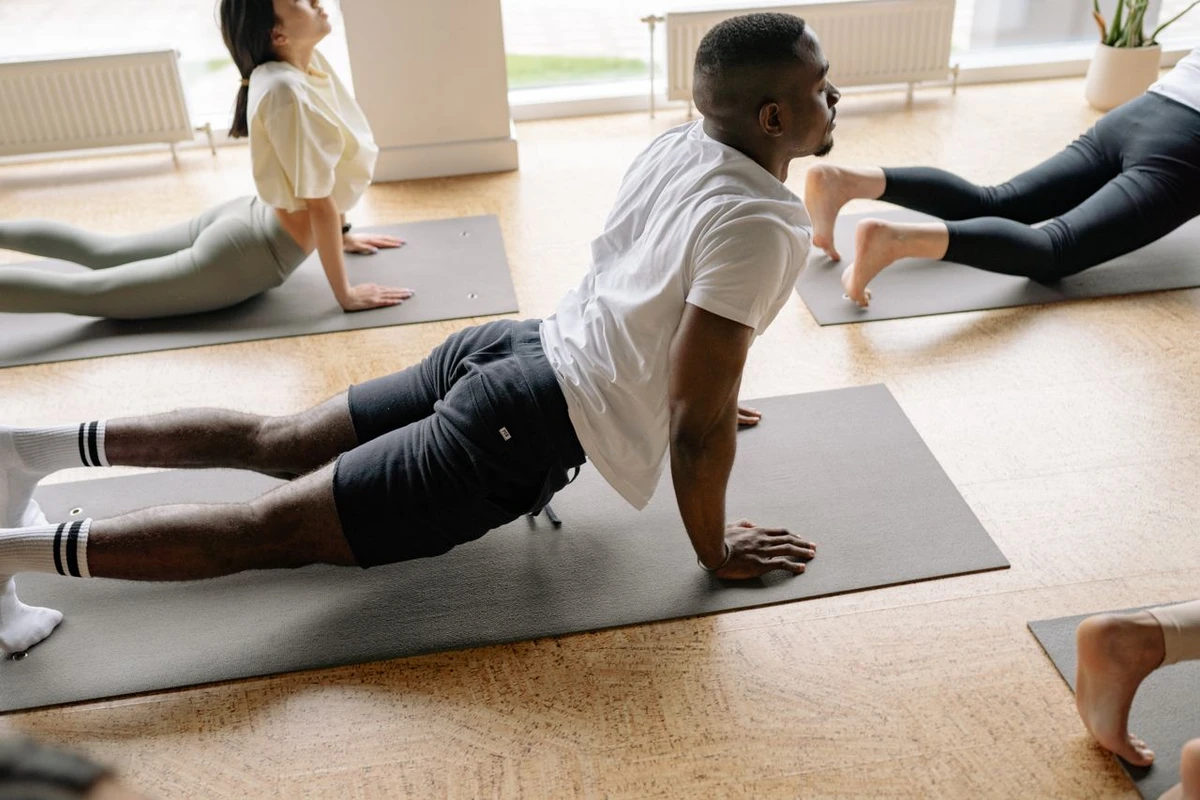
Loneliness isn’t just an unpleasant feeling to push through. A 2015 meta-analysis pooling data from over 3 million people found that social isolation, loneliness, and living alone were each linked to a 26-32% increase in the risk of dying earlier, an effect size in the same range as well-established risks like obesity and physical inactivity (Holt-Lunstad et al., 2015). The effect held regardless of age or existing health status, which is one of the reasons researchers don’t think it’s simply that unhealthy people end up more isolated.
The World Health Organization has since treated this as enough of a public health issue to convene a global Commission on Social Connection. Its 2025 report estimated that loneliness and isolation are linked to roughly 871,000 deaths a year worldwide, and found it’s most common among adolescents and young adults, not, as most people assume, the elderly (World Health Organization Commission on Social Connection, 2025). The Harvard Study of Adult Development, the longest-running study of its kind, reached a similar conclusion from a different angle: tracking the same people for over 80 years, the strongest predictor of healthy aging wasn’t cholesterol or genetics, it was how satisfied people were with their relationships in midlife (Waldinger & Schulz, 2023).
None of this means your training is wasted effort. It means connection functions as its own, largely untracked, input into how long and how well you live, on the same order of magnitude as the metrics you’re already watching.
Third places used to do this work for free
Sociologist Ray Oldenburg coined the term “third place” for the category of spot that isn’t home or work: somewhere low-cost, low-pressure, and built around regulars who show up and talk to each other (Oldenburg, 1989). Bars, cafes, churches, and youth centers filled that role for most of the last century, mostly without anyone thinking of them as health infrastructure.
Several of those spaces have been quietly shrinking, and not just in one country. In the US, Bureau of Labor Statistics data shows a fifth fewer movie theaters and nearly a third fewer bowling alleys than in 2001, and a 2025 study tracking 12 categories of third place, from libraries to recreation centers to restaurants, found closures across every single category between 2019 and 2021, with the losses landing hardest in rural areas and lower-income communities (Gioino, 2026; Sun et al., 2025). Bars are thinning out too, partly for a healthier reason: Gen Z is drinking noticeably less than previous generations at the same age, with surveys putting the drop at around 30% less alcohol consumed than Millennials drank at a comparable age, and nearly two-thirds saying they planned to drink less in 2025 (Leger Marketing, 2025). That’s good news for a lot of health outcomes, but it also removes a default place people used to run into each other. Youth centers are being cut back in city after city as municipal budgets tighten, where I live (in Germany) and elsewhere, with cities reporting closures, reduced hours, and staffing freezes (Kreisjugendring München-Stadt, 2025; taz, n.d.). Fewer bars, fewer bowling alleys, fewer youth clubs. The third places didn’t disappear everywhere, but the ones that used to be handed to us by default got harder to find.
How the gym quietly became the new third place
Somewhere in that gap, the gym stepped in, and the “third place” framing turns out to be more than a metaphor. American gyms logged close to 7 billion visits in 2025, the highest number on record and above the pre-pandemic peak, with 81 million members and Gen Z posting the highest membership rate of any age group (Health & Fitness Association, 2026). The share of members who never show up hit an all-time low. People aren’t just paying for gym access, they’re using it.
Strava’s 2025 data tells the same story from the group side: new running and training clubs on the platform nearly quadrupled in a year, with running clubs up 3.5 times and hiking clubs up nearly 6 times (Strava, 2025). Bloomberg’s reporting on London’s Third Space, a gym that operates more like a members’ club on a Friday night, and CNBC’s coverage of social wellness clubs like Bathhouse and Othership, both describe the same pattern: people going to move their bodies and coming out with a social calendar (Neelakandan, 2026). Underneath it is a real need. Cigna data cited by CNBC put the share of Gen Z reporting loneliness at 67% (Neelakandan, 2026).
And the money is following the tracking, not the room. Venture capital poured into wearables like Oura and Whoop, both now valued north of $10 billion, while funding for the actual physical spaces where people work out together hit a cyclical low (Majic Predin, 2026). That’s a strange allocation of resources for a generation that’s telling us, with its feet, that the room matters as much as the number on the wrist.
How isolation hits men and women differently
Loneliness and isolation aren’t the same thing, and they don’t affect men and women identically. Isolation is the objective absence of contact; loneliness is the subjective sense that your relationships aren’t enough. A 2025 analysis of over 320,000 UK Biobank participants found that isolation raised all-cause and cardiovascular mortality risk in both sexes, with a somewhat larger effect in men, while loneliness itself was linked to earlier death mainly in women rather than men (Vallée, 2025). Part of the explanation seems to be behavioral: isolated men are more likely than isolated women to let other health habits slide too, skipping meals, moving less, managing chronic conditions less consistently, which compounds the direct effect of isolation itself (Vallée, 2025).
This matters for how you think about your own risk. If you’re a man, isolation itself, even without feeling distressed about it, is worth treating as a signal. If you’re a woman, the subjective sense of not having enough real connection is the number worth paying attention to, independent of how many people are technically in your life.
What I’ve actually changed
I didn’t restructure my life around this research, but I did stop treating my training time as separate from my social time, especially since becoming a mother, when both time and energy are the two things I have the least of. Overlap between the two stopped feeling like a compromise and started feeling like the point, rather than a distraction from “real” training.
A few things that have actually worked, for me and for people I’ve talked to about this:
- Pick one recurring class or group session over solo sessions, even if it’s not your optimal programming. A weekly running club or class beats a perfectly periodized solo plan you do alone, because you’ll actually show up to see the people, and consistency compounds.
- Show up at the same times. Third places work because of “regulars.” If you always train at 7am on Tuesdays, you’ll see the same faces, and familiarity is what turns strangers into training partners.
- Say yes to the coffee after. The workout is often the excuse, not the point. The five minutes of talking afterward is where the actual relationship gets built.
- Treat a new gym or class like a third place, not a task. Give it a real season, six to eight weeks, before deciding whether it’s “your” place. Third places take repeated exposure to click.
- Show up for the events outside the regular class schedule. Workshops, seminars, open-house sessions, watch parties for a race or a big game, anything your gym or studio runs with a local business or partner. These pull in the same regulars in a lower-pressure setting, which is exactly where conversations start.
- Use apps and clubs (Strava, run clubs, gym class communities) as a bridge, not a replacement. They’re good for finding the in-person group; they’re a poor substitute for actually showing up to it.
FAQ
Isn’t this just an argument for extroverts? No. The research measures both loneliness (a subjective feeling) and isolation (an objective lack of contact), and even a small number of quality relationships is protective. This isn’t about maximizing your social calendar, it’s about making sure you have a handful of people you see regularly.
I already work out alone and like it. Do I need to change that? Not necessarily. Solo training and social connection aren’t opposites, you can get both by adding one recurring group session to an otherwise solo routine, rather than overhauling everything. And if you already have solid relationships outside the gym, there’s nothing wrong with keeping your workout as your alone time. The point isn’t that every part of your life needs to be social, it’s making sure the connection is happening somewhere.
Does an online community count? It can help as a bridge, but the mortality data comes from studies of in-person contact and support. Treat online groups as a way to find your in-person third place, not as the destination itself.
Why does this matter more as I get older, not less? Work and parenting often generate social contact by default when you’re younger. Both tend to shrink as sources of unplanned social contact with age, which is part of why the WHO commission found isolation is common in older adults specifically, even though loneliness itself peaks earlier, in adolescence and young adulthood.
Is a gym really a substitute for a close friendship? Not on its own. What a gym or class provides is proximity and repetition, the conditions under which close relationships tend to form. The gym is the third place; the friendship is still something you have to build inside it.
Should I worry more about isolation or loneliness? Both matter, but track whichever one is actually true for you. If you technically see people often but still feel disconnected, that’s loneliness. If your calendar is genuinely empty of casual contact, that’s isolation. The Vallée (2025) findings suggest isolation is worth flagging for men in particular, even absent distress about it.
Sources
Gioino, C. (2026, August 2). Bars, bowling alleys, and movie theaters cost too much to run and visit. Americans have run out of places to hang out and we’re paying with our health. Fortune. https://fortune.com/2026/08/02/bars-bowling-alleys-movie-theaters-affordabilitiy-third-space-health/
Health & Fitness Association. (2026). 81 million Americans were members of a fitness facility in 2025: New HFA report finds. https://www.healthandfitness.org/81-million-americans-were-members-of-a-fitness-facility-in-2025-new-hfa-report-finds/
Holt-Lunstad, J., Smith, T. B., Baker, M., Harris, T., & Stephenson, D. (2015). Loneliness and social isolation as risk factors for mortality: A meta-analytic review. Perspectives on Psychological Science, 10(2), 227–237. https://doi.org/10.1177/1745691614568352
Kreisjugendring München-Stadt. (2025). Sparmaßnahmen treffen junge Menschen schon jetzt. https://www.kjr-m.de/allgemein/sparmassnahmen-treffen-junge-menschen-schon-jetzt/
Leger Marketing. (2025). Why Gen Z and Millennials are going sober. https://leger360.com/en/market-intelligence-beyond-the-buzz-2025-sober-curious/
Majic Predin, J. (2026, July 7). Gyms became the new third place and venture capital missed it. Forbes. https://www.forbes.com/sites/josipamajic/2026/07/07/gyms-became-the-new-third-place-and-venture-capital-missed-it/
Mays, A. M., Kim, S., Rosales, K., Au, T., & Rosen, S. (2020). The Leveraging Exercise to Age in Place (LEAP) study: Engaging older adults in community-based exercise classes to impact loneliness and social isolation. American Journal of Geriatric Psychiatry. https://doi.org/10.1016/j.jagp.2020.10.006
Neelakandan, L. (2026, March 7). Inside the booming business of wellness third spaces and membership clubs. CNBC. https://www.cnbc.com/2026/03/07/wellness-third-spaces-othership-bathhouse-glo30.html
Oldenburg, R. (1989). The great good place: Cafes, coffee shops, community centers, beauty parlors, general stores, bars, hangouts, and how they get you through the day. Paragon House.
Strava. (2025). Year in Sport 2025. https://press.strava.com/articles/strava-releases-12th-annual-year-in-sport-trend-report-2025
Sun, Y., Esposito, M. H., Sagehorn, M., Melendez, R. A., & Finlay, J. M. (2025). Uneven access to essential services and amenities: Geographic disparities in “third place” availability across the United States from 2010 to 2021. Health & Place, 96, Article 103583. https://doi.org/10.1016/j.healthplace.2025.103583
taz. (n.d.). Jugendzentren müssen Sparzwang weichen. https://taz.de/!526053/
Vallée, A. (2025). Sex differences in the impact of social isolation and loneliness on mortality. Public Health. Advance online publication. https://doi.org/10.1016/j.puhe.2025.105831
Waldinger, R., & Schulz, M. (2023). The good life: Lessons from the world’s longest scientific study of happiness. Simon & Schuster.
World Health Organization Commission on Social Connection. (2025). From loneliness to social connection: Charting a path to healthier societies. World Health Organization.
A note from us We’re Martin and Marina, Astrea’s co-founders. We’re both into data and serious about our own training, but neither of us is a doctor or a clinical researcher. The health and physiology claims in this article come from published, peer-reviewed research, not our own expertise, which is why every article ends with a Sources list above. If a claim doesn’t trace back to a real source, we cut it before it gets published.
Astrea is built calm, community-first, and inclusive — because we think that’s what actually supports showing up for years, not just this week.